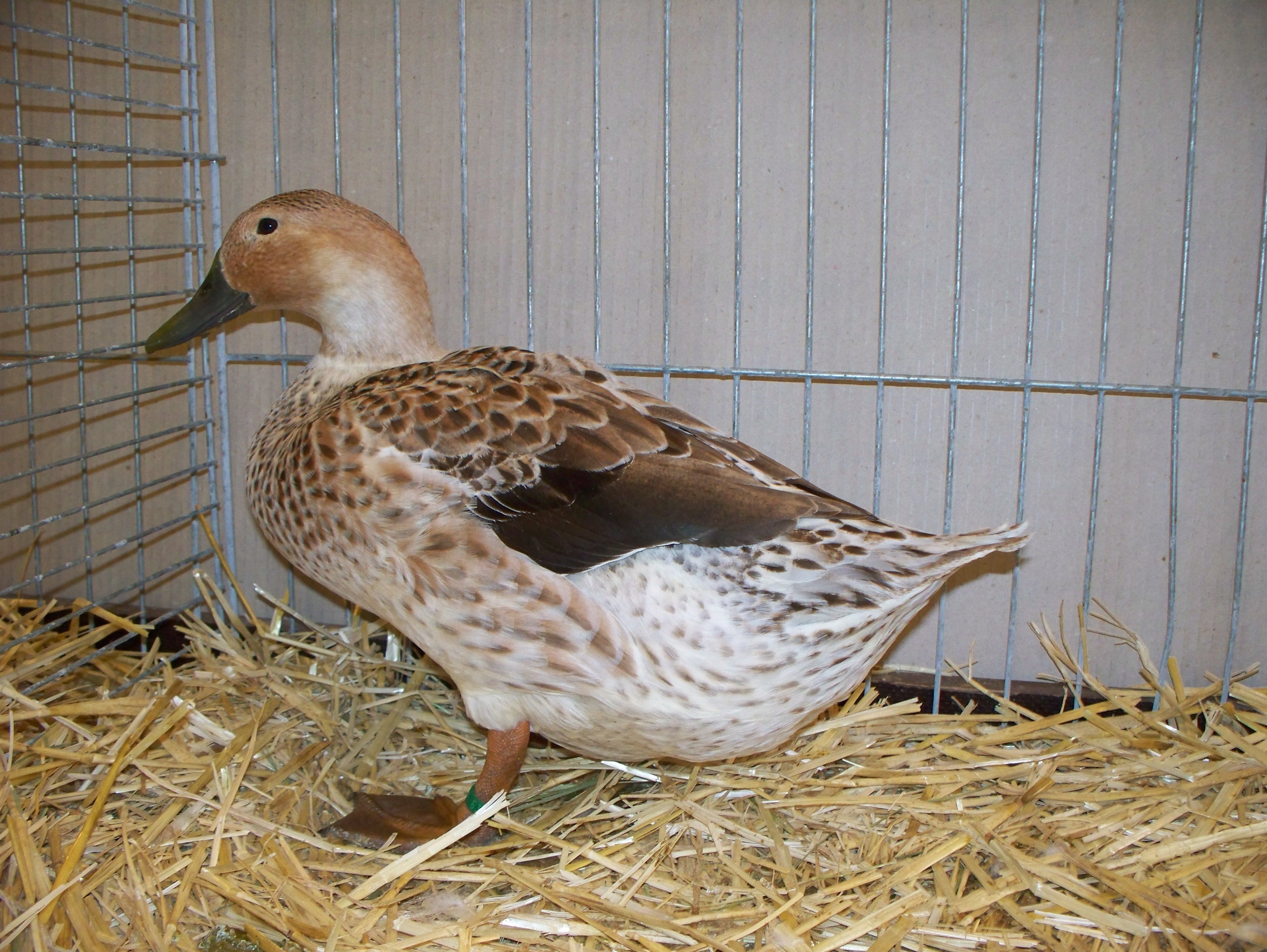
Overview
The Welsh Harlequin duck began as a spontaneous color mutation within a flock of Khaki Campbells in Wales during the early 1900s. A breeder recognized the unique coloring and began a selective breeding program to stabilize these traits. It was developed to be a productive dual-purpose duck, excelling in both egg production and meat quality from its earliest days. During the middle of the 20th century, the breed faced near extinction, with its numbers dwindling significantly. Fortunately, dedicated efforts led to its rediscovery and re-establishment from a limited gene pool in the 1960s. These conservation efforts helped to secure its future, and the breed slowly regained popularity among poultry enthusiasts due to its attractive appearance and practical utility.
Origins
Tracing back to Wales, the Welsh Harlequin earned its place in the lineage of ducks through generations of selection — a slow conversation between climate, husbandry, and human eye. Leslie Bonnet's Welsh layer — refined Khaki Campbell sport.
Temperament
Custodians describe the Welsh Harlequin as docile and active, they are excellent foragers suited for diverse environments..
Conservation
Current status: Recovering, due to renewed interest and breeding programs. · rarity tier Uncommon. Working populations remain in the hands of a small global network — 0+ of them keep programmes on Best of Breed alone.
Welsh Harlequin, in photographs.
A living plate — community submissions and high-resolution photographs from Wikimedia Commons, sorted by clarity.