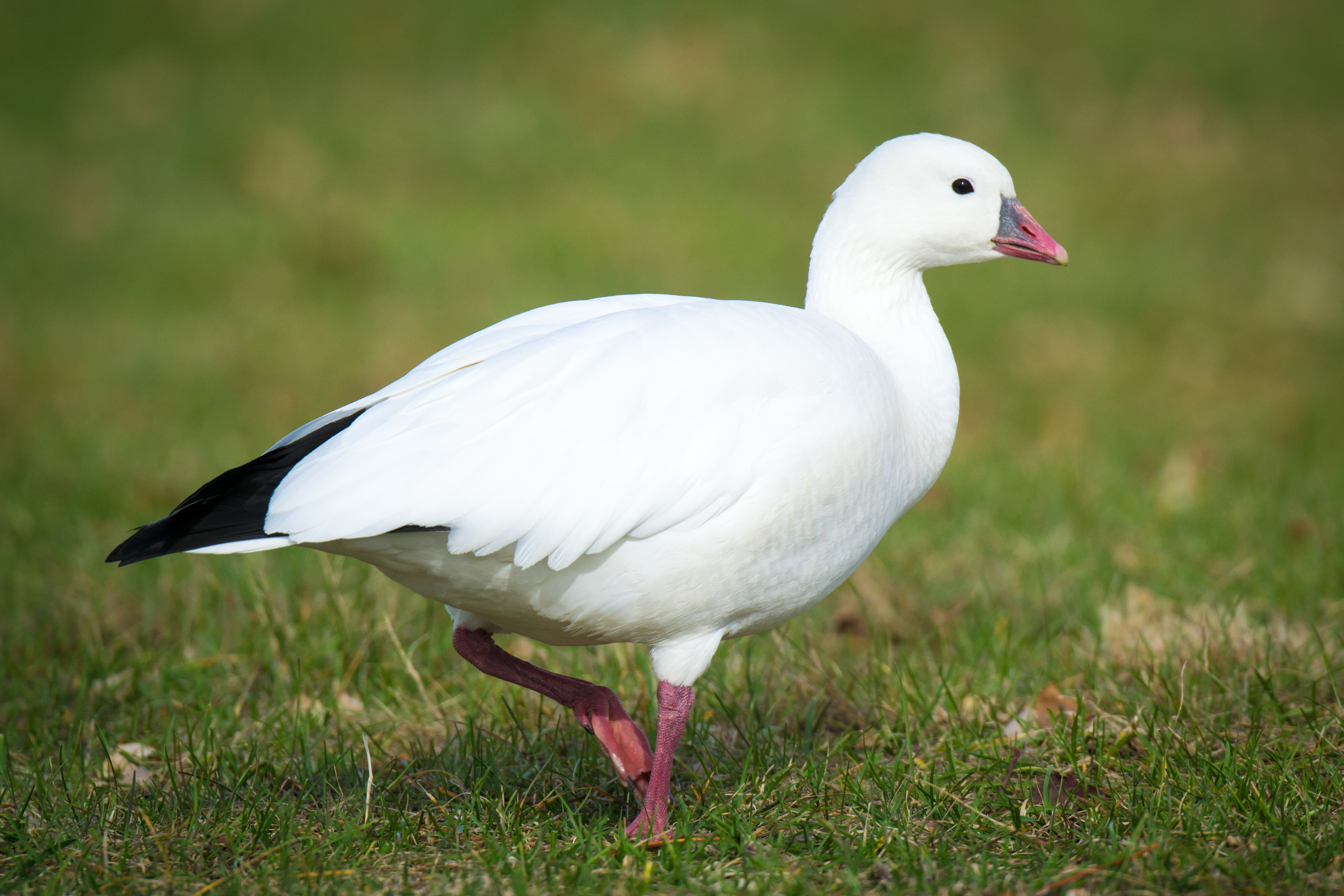
Overview
The Ross's Goose is a small North American goose. It shares many characteristics with the Snow Goose, and historically, some considered it a subspecies. This goose has always been found in Arctic regions, predominantly breeding in specific northern areas. Its population has experienced significant fluctuations over time.
Over the past century, the population of Ross's Geese has generally increased, likely due to a combination of factors. These include changes in agricultural practices that provide more abundant food sources during migration and wintering, as well as conservation efforts. Today, it is a common species across its migratory range, frequently seen alongside Snow Geese.
Origins
Tracing back to North America, the Ross's Goose earned its place in the lineage of ornamental waterfowl through generations of selection — a slow conversation between climate, husbandry, and human eye. Miniature white Arctic goose.
Temperament
Custodians describe the Ross's Goose as generally docile, but can be somewhat wary..
Conservation
Current status: Common · rarity tier Uncommon. Working populations remain in the hands of a small global network — 0+ of them keep programmes on Best of Breed alone.
Ross's Goose, in photographs.
A living plate — community submissions and high-resolution photographs from Wikimedia Commons, sorted by clarity.