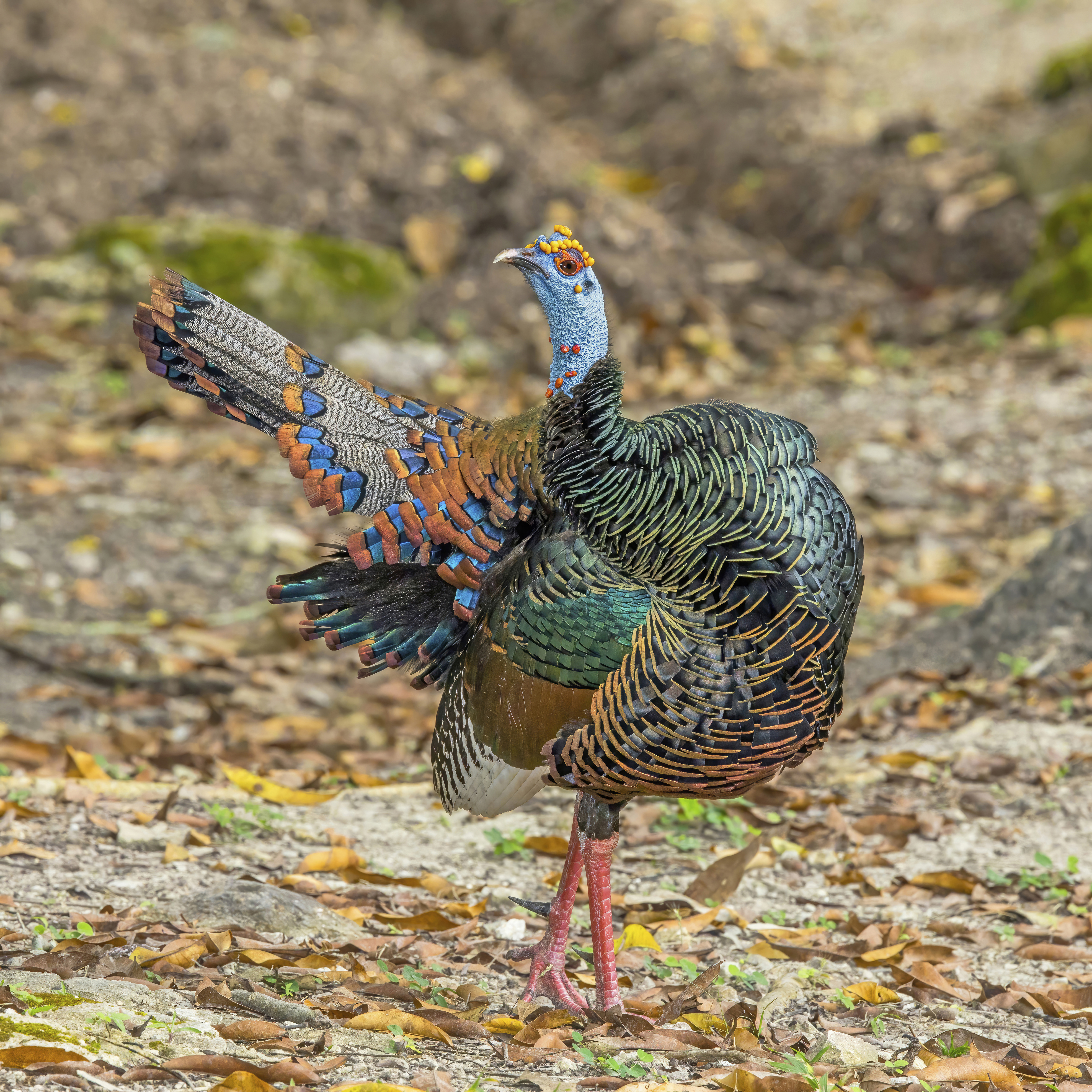
Overview
The Ocellated Turkey is a species native to the Yucatán Peninsula. Its historical range encompasses parts of Mexico, Guatemala, and Belize. This species has been a part of the ecological and cultural landscape of its native region for a very long time, existing in the wild rather than being domesticated. Its distinctive appearance sets it apart from the more commonly known North American wild turkey species.
Today, the Ocellated Turkey remains an important wild species within its native habitat. It is admired for its unique coloration and plays a role in the ecosystems where it lives. While it has not been extensively domesticated or spread globally like the common turkey, efforts are sometimes made to monitor its populations.
Origins
Tracing back to Yucatán, the Ocellated Turkey earned its place in the lineage of turkeys through generations of selection — a slow conversation between climate, husbandry, and human eye. Wild Mesoamerican species with iridescent ocelli.
Temperament
Custodians describe the Ocellated Turkey as these are wild birds, generally wary and elusive..
Conservation
Current status: Near Threatened · rarity tier Rare. Working populations remain in the hands of a small global network — 0+ of them keep programmes on Best of Breed alone.
Ocellated Turkey, in photographs.
A living plate — community submissions and high-resolution photographs from Wikimedia Commons, sorted by clarity.