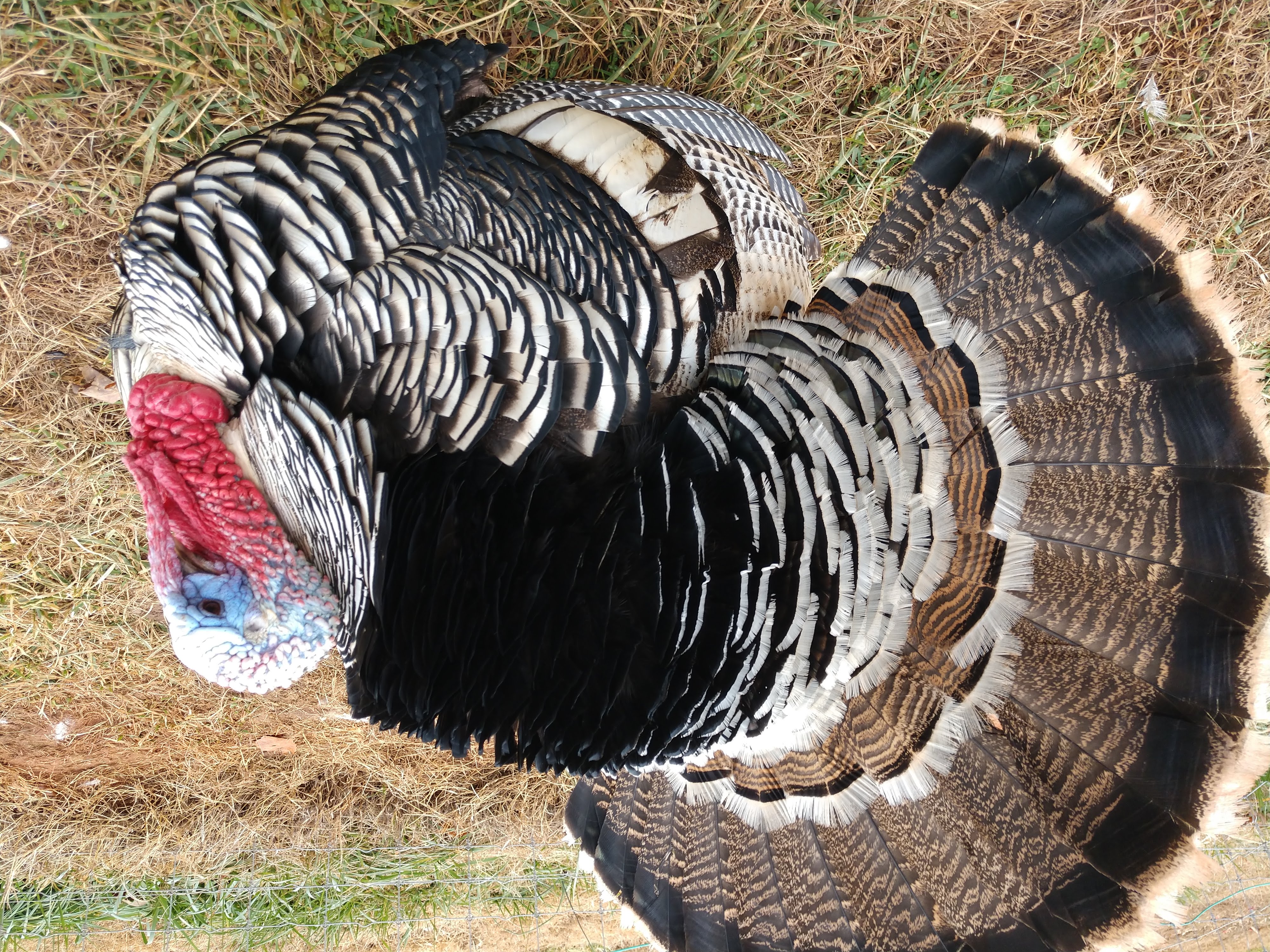
Overview
The Narragansett turkey emerged in New England, specifically Rhode Island, through crosses involving the domestic turkey stock of early European settlers and the native wild turkey of the region. This breeding work aimed to develop a bird well-adapted to the local environment and suitable for poultry production. The breed's distinctive coloration became a recognizable trait as it gained popularity in the northeastern United States.
Initially prized for its dual-purpose qualities, providing both meat and eggs, the Narragansett became a significant commercial turkey breed before the widespread adoption of broad-breasted varieties. Its numbers declined with the rise of industrial agriculture, but efforts have been made to conserve and reestablish it as a heritage breed, valued for its historical significance and natural foraging ability.
Origins
Tracing back to Rhode Island, USA, the Narragansett earned its place in the lineage of turkeys through generations of selection — a slow conversation between climate, husbandry, and human eye. Steel-grey heritage breed from New England.
Temperament
Custodians describe the Narragansett as known for a docile and calm disposition, making them relatively easy to manage..
Conservation
Current status: Watch · rarity tier Rare. Working populations remain in the hands of a small global network — 0+ of them keep programmes on Best of Breed alone.
Narragansett, in photographs.
A living plate — community submissions and high-resolution photographs from Wikimedia Commons, sorted by clarity.