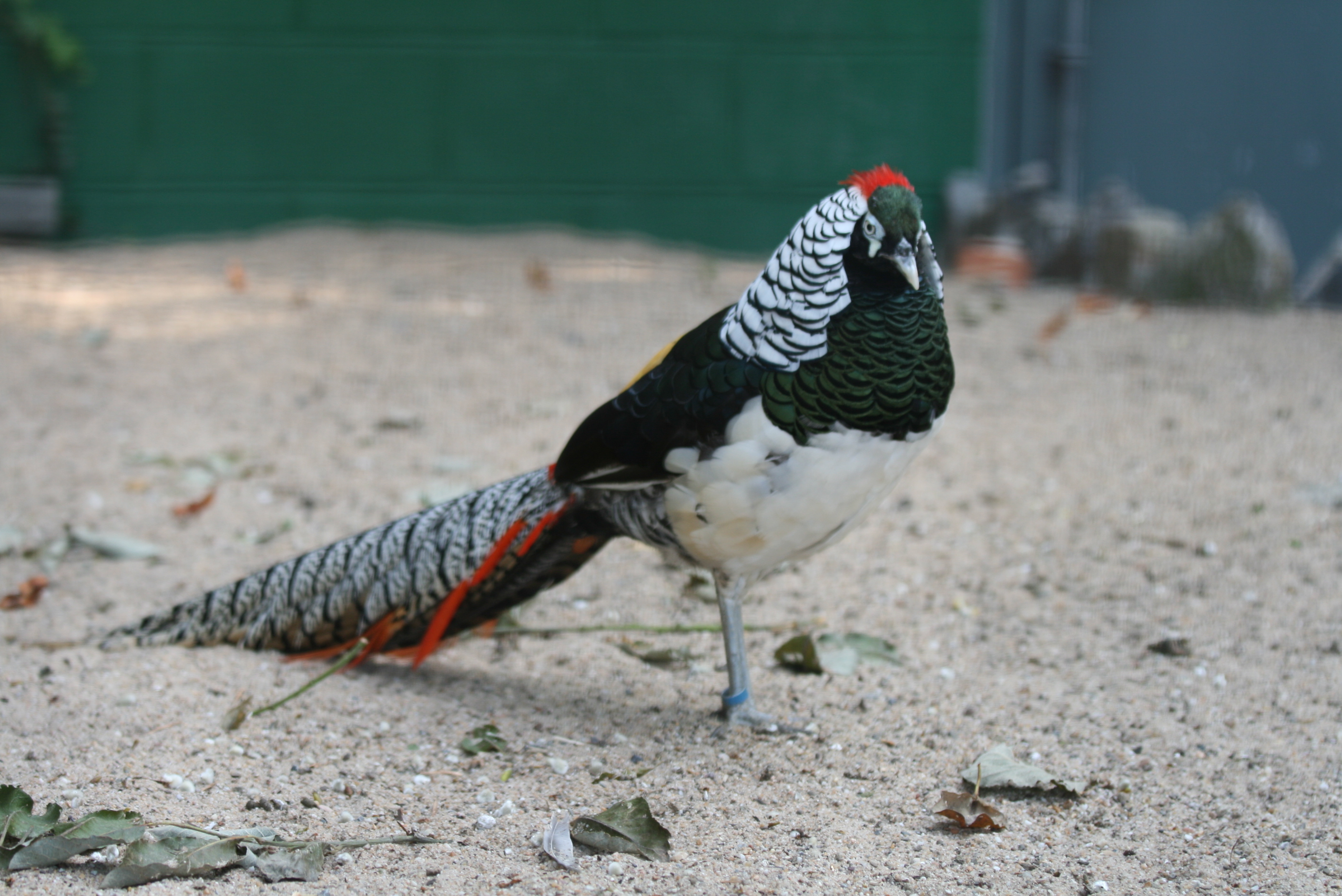
Lady Amherst's Pheasant
Iridescent green crown, scarlet crest, ribbon-barred tail.
Overview
Lady Amherst's Pheasant originates from mountainous regions on the border of China and Myanmar. These birds were historically admired for their striking plumage and were introduced to other parts of the world, including Europe. Their beauty made them popular additions to aviaries and ornamental bird collections, contributing to their spread outside their native range. The species has adapted to various captive environments over time.
Today, Lady Amherst's Pheasants are primarily found in captive settings globally, maintained by private breeders and zoological institutions. While their wild populations face habitat challenges, the species remains well-established in aviculture. Efforts are made to ensure genetic diversity within captive flocks and to understand their ecological role in their native habitats.
Origins
Tracing back to China / Myanmar, the Lady Amherst's Pheasant earned its place in the lineage of pheasants through generations of selection — a slow conversation between climate, husbandry, and human eye. Iridescent green crown, scarlet crest, ribbon-barred tail.
Temperament
Custodians describe the Lady Amherst's Pheasant as these pheasants can be shy; males may be territorial, particularly during breeding season..
Conservation
Current status: Not formally tracked, but wild populations are decreasing. · rarity tier Uncommon. Working populations remain in the hands of a small global network — 0+ of them keep programmes on Best of Breed alone.
Lady Amherst's Pheasant, in photographs.
A living plate — community submissions and high-resolution photographs from Wikimedia Commons, sorted by clarity.